Neighborhood guide
Apartments Near Industry City, Brooklyn
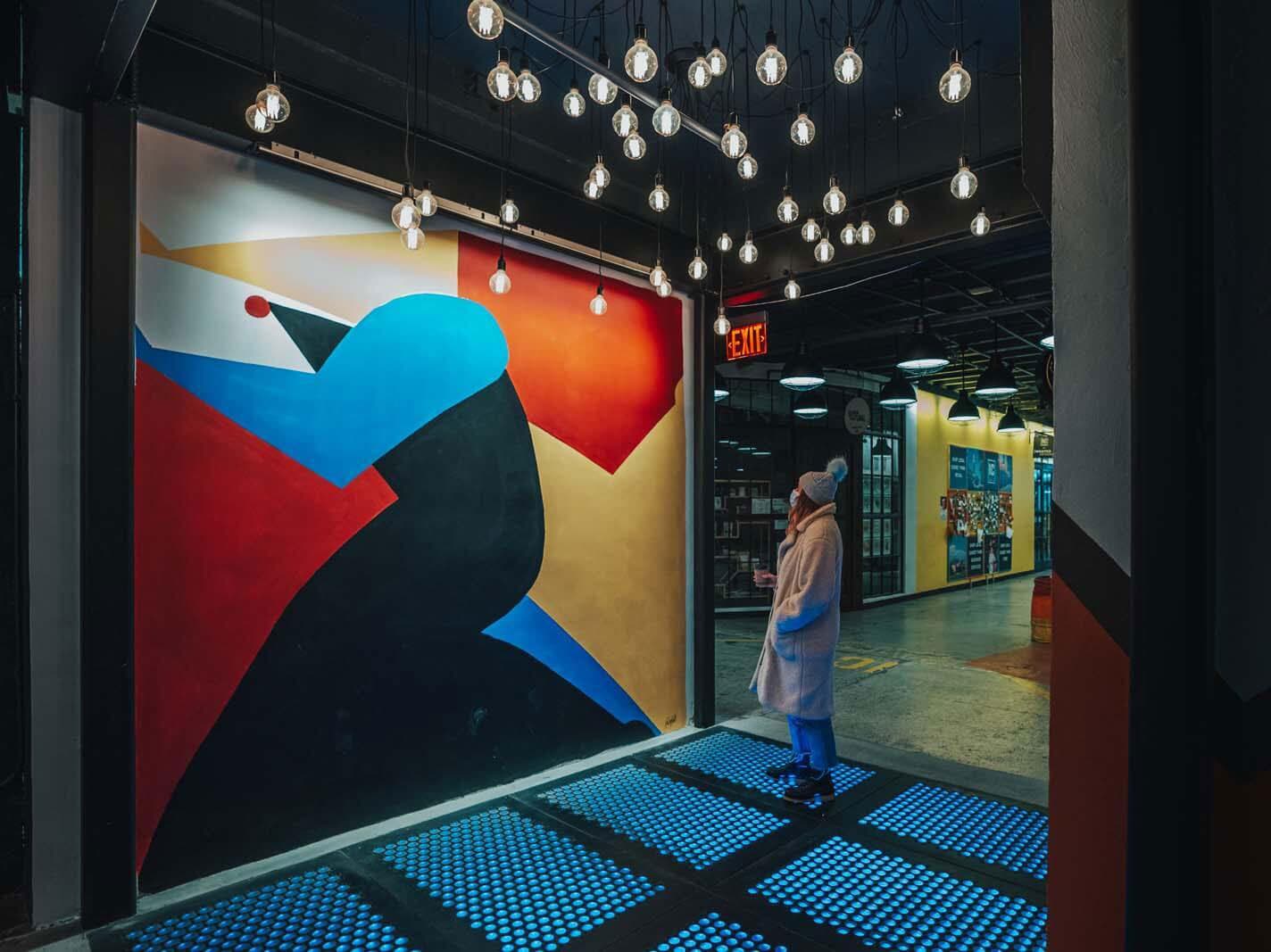
For a lot of people, the campus at the end of the street is the reason they looked at Sunset Park in the first place. Before you decide how much that proximity is worth, it helps to know what the place actually is, and what having it nearby does to an ordinary Tuesday rather than a planned Saturday.
What Industry City is
It began as Bush Terminal, founded by Irving T. Bush and, in Industry City's own account, the first multi-tenant industrial complex of its kind in New York City. The waterfront buildings did what waterfront industrial buildings everywhere did, and then stopped. A $450 million redevelopment beginning in 2013 turned the site into something else.
The campus now describes itself as 35 acres holding over 700 companies and more than 460,000 square feet of retail, taking 3.3 million visits a year. In practice that means food halls, shops, design and manufacturing studios, offices, courtyards and a calendar of events, spread across interconnected buildings you can walk between without going outside in February.
The scale is easy to underestimate from the street. Building hours are published as 9am to 9pm, with a pointer to the directory for individual store hours, and that split matters more than it sounds. The campus stays open long after most of what is inside it has shut, so a first visit at 8pm on a weekday can mean walking through a very quiet building past a lot of closed shutters.
How to find what you want there
A campus with several hundred tenants defeats the usual approach of reading a list somebody wrote two years ago. Industry City maintains three pages that stay current, and between them they answer almost any question worth asking.
- The business directory. Filterable by primary industry, with categories including artist and photographer, beauty and wellness, biotech, consumer products, design, entertainment, fashion, food and beverage, manufacturing, media and production, nonprofit, services and tech. This is the page that tells you whether the thing you need is on the campus at all.
- The eat and drink pages. The campus describes over 40 global food vendors alongside tasting rooms, breweries and distilleries, sorted into food hall, grab and go, pan Asian and sit down dining, with drink split into breweries, distilleries, cocktails and coffee and tea. Each listing carries its own hours.
- The events calendar. Weekly recurring programming and one-off markets run alongside each other, and the calendar is where the weeknight things surface. On the day this guide was checked it listed fifty events across the following three months.
Get in the habit of checking the directory before you leave the apartment. Tenants move, hours shift with the season, and a campus this size will not hold still long enough for any article to stay accurate for more than a few months.
What changes when it is local
Visiting and living beside it are two different experiences. When you visit, it is a Saturday you planned: you checked the trains, you got there at one, and you waited for a table. When you live here, it turns into somewhere you cut through on the way to something else, and that is where most of the value actually sits.
You start buying coffee there because it is on your way, not because you decided to go. Dinner gets settled at six instead of at noon. You go to a weeknight thing because leaving early is easy and you have not committed to anything, and over a few months you end up knowing which shops and studios are worth a second look, simply because you walk past them enough times to notice.
The food guide covers the campus and the two avenues properly, including how to find what is open now rather than what was open when an article was written.
Getting to and from the campus
Three ways in, and they suit different trips.
- The subway. The nearest station on the Fourth Avenue line is 36 St, which the State’s MTA Subway Stations dataset lists as serving the D, N and R. The D and N run express through here; the R makes every stop. The same dataset flags 36 St as not accessible, which matters if you are arriving with a stroller, a bike or a mobility device.
- The ferry. The Sunset Park/Brooklyn Army Terminal landing sits at Pier 4, 140 58th Street, on NYC Ferry’s South Brooklyn route, which runs to Bay Ridge, Red Hook, Atlantic Avenue, Wall Street/Pier 11, Corlears Hook and East 34th Street. The operator lists the adult one-way fare at $4.00. Boats come at set times rather than every few minutes, so read the schedule before you build a commute around one.
- A bike. NYC DOT publishes a cycling map each spring showing protected lanes, conventional lanes, shared lanes and greenways, and notes that the web map may not reflect construction or lanes currently being installed. Citi Bike covers this part of Brooklyn as part of a network it describes as more than 35,000 bikes and over 2,300 stations.
What else is within walking distance
Six places are worth the walk from this stretch of Fourth Avenue. The campus is the only one most people arrive already knowing about, which is a shame, because two of the others are better on a weekday. Each row below is sourced to the body that owns the fact: NYC Parks data for the park, the business improvement district for Fifth Avenue, Green-Wood for the cemetery, NYC Ferry for the landing.
| Place | Which way | What it is |
|---|---|---|
| Industry City | West of Fourth Avenue, toward the waterfront | Food halls, shops, studios, courtyards and events. Building hours are published as 9am to 9pm, with tenant hours listed separately. |
| Eighth Avenue | East, up the hill | One of New York’s major Chinese commercial corridors, with Vietnamese food and bakeries. |
| Fifth Avenue | One block east | The Latin American commercial street. The business improvement district covers 38th to 64th Street and counts more than 600 businesses on the avenue. |
| Sunset Park | South and east, on the hill | A 24.5-acre community park running 41st to 44th Street between Fifth and Seventh Avenues, with harbor and skyline views. |
| Green-Wood Cemetery | North and east | 478 acres, founded in 1838 and a National Historic Landmark since 2006. Its Sunset Park gate is on Fourth Avenue at 35th Street. |
| The ferry landing | West, at the waterfront | Sunset Park/Brooklyn Army Terminal, Pier 4 at 140 58th Street, on the NYC Ferry South Brooklyn route. |
Distances and walking times vary by address and by which entrance you use, so check the route on current maps from the specific building you are considering rather than trusting a figure in an article.
Two of these come with rules worth knowing before you walk over. Green-Wood’s published rules say plainly that “we do not allow pets aside from service animals”, that bicycles and scooters must be parked at the rack outside the gates, and that visitors should refrain from running, jogging and game playing. Snacks are fine, picnicking is not. Its hours page lists the main entrance at Fifth Avenue and 25th Street as open 7am to 7pm from April through September and 8am to 5pm from October through March, with the Sunset Park gate at Fourth Avenue and 35th Street open 8am to 4pm daily. The Sunset Park BID, established in 1995, runs the Fifth Avenue corridor from 38th to 64th Street and programs events along it.
Working from here
Plenty of people looking at this corridor are really asking about work, not about going out. It depends which of these three you are.
If you work on the campus, the calculation is simple and it is the best version of this neighborhood: the commute becomes a walk, and the thing that usually costs an hour a day costs nothing. If you commute into Manhattan, the Fourth Avenue line is the reason to be here, and the commute guide covers how to test the specific trip you will make.
If you work from home, the question is where you go when the apartment stops working. Industry City has cafes and workspace, all listed in the directory above. 875 Fourth Avenue has a resident co-working lounge downstairs, which spares you buying a coffee you did not want and hunting for a table on a Saturday. The building has a resident co-working lounge. Confirm its access hours with EXR leasing, since shared-space hours are set by the building rather than published here.
What to check before choosing an address
Proximity is the easy part to advertise and the easy part to overstate. Six things actually decide it, and all six can be settled in one afternoon.
- Which entrance. The campus runs several blocks and has more than one way in. Walk to the one nearest the building, not to the address on the website.
- The route itself. Crossings, hills and the state of the sidewalk all matter more than how many blocks it is. This part of Brooklyn climbs steeply from the water up to the park, and a map will not warn you.
- What is open when you would go. Campus hours and individual tenant hours are different things, and both change seasonally. Check the directory for the two or three tenants you would actually use.
- The walk after dark. Do the same route at 9pm as well as at noon. The blocks between Fourth Avenue and the waterfront are industrial in character and change more between those two hours than most streets do.
- Which station, and whether it has an elevator. 36 St serves the D, N and R, which is the strongest transit position on this corridor, and it is not flagged accessible. If that matters, check it on MTA accessibility before you commit.
- The apartment itself. A great location does not fix a home that does not suit you. Confirm the specific residence and its written terms.
Apartments at 875 Fourth Avenue
875 Fourth Avenue sits on Fourth Avenue near the 36 Street D, N and R station, a short walk east of the campus. What the building confirms: 150 residences, and kitchens with stainless steel appliances and quartz countertops. Every residence includes a dishwasher. Apartments use split-system A/C units. Confirm controls and the heating setup for the specific residence with EXR leasing. Ask EXR leasing to confirm the laundry equipment and setup in the specific residence you are considering.
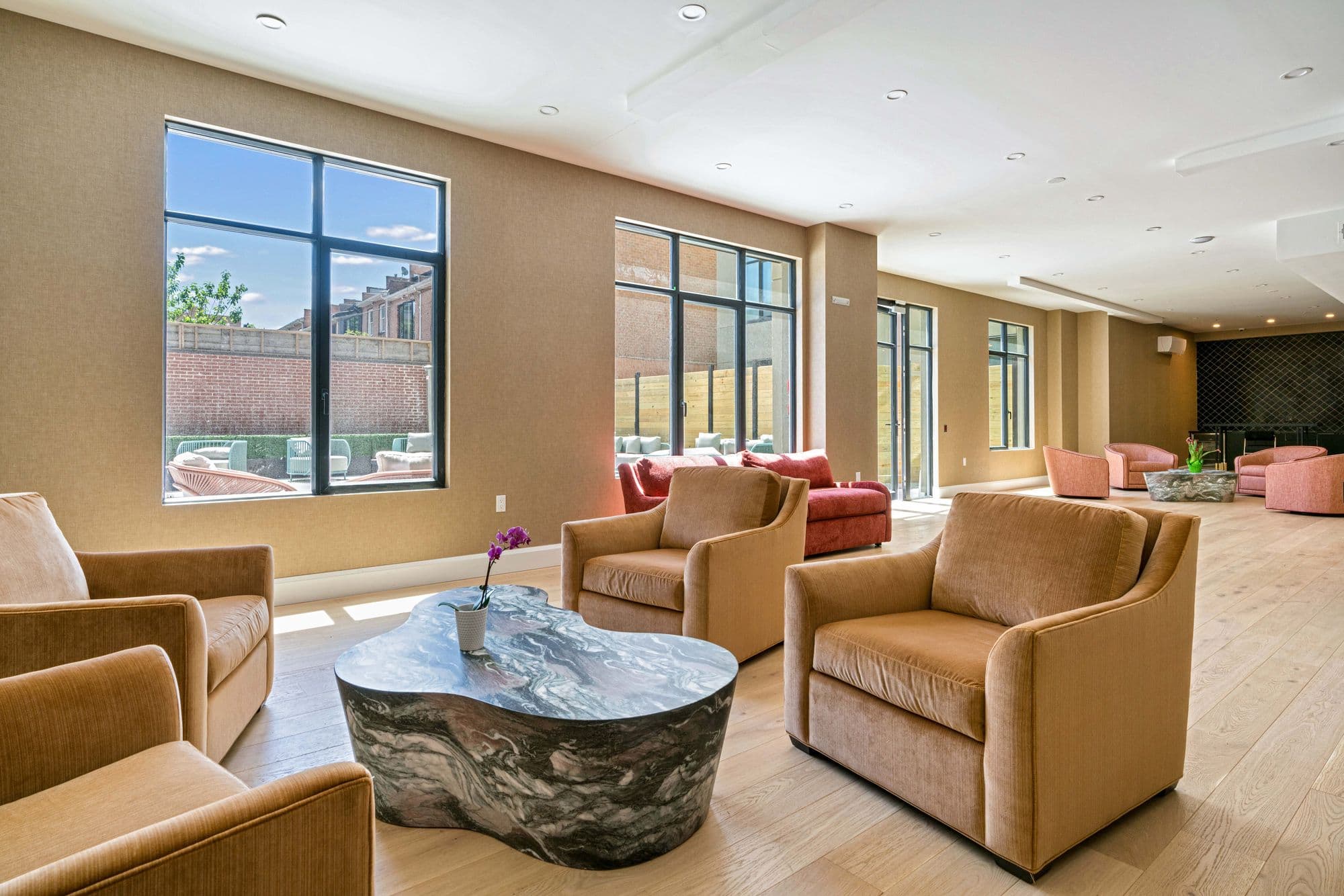
Shared space includes a furnished rooftop terrace with Manhattan skyline views, The building's grills are on the rooftop terrace only. The building has a resident fitness center. The fitness center is open daily from 6:00 AM through 11:59 PM. The building has a resident co-working lounge. There is also a courtyard, bike storage, a package room and an on-site garage with 21 parking spaces. Current availability, pricing, eligibility, and assignment terms must be confirmed with EXR leasing. Doorman service is provided from 9:00 AM to 5:00 PM, seven days a week.
Ceiling height, windows, closets, outdoor space, and the view vary by residence; ask EXR leasing to confirm them for the specific home you are considering.
Two-bedrooms
$4,500
Two bedrooms, whether that means sharing or a room that is not the sofa.
See two-bedroom apartmentsCurrent homes, asking rents and any listed concession are on the availability page, which is the only place on this site where those numbers are current.
Questions people ask
What is Industry City?
A 35-acre campus on the Sunset Park waterfront, originally the Bush Terminal industrial complex, redeveloped from 2013. Industry City says it now holds over 700 companies and more than 460,000 square feet of retail, and takes 3.3 million visits a year.
How far is Industry City from Fourth Avenue?
A short walk west, toward the waterfront. Use current maps to check the exact route and timing from the specific address you are considering, since the campus has several entrances and they are not equally close.
Is there anywhere to work at Industry City?
The campus includes workspace and cafes, and it publishes its current tenants in its own business directory. 875 Fourth Avenue also has a resident co-working lounge in the building itself.
What is actually at Industry City to eat?
Industry City describes over 40 global food vendors alongside tasting rooms, breweries and distilleries, organized into food hall, grab and go, pan Asian and sit down dining, with drink split into breweries, distilleries, cocktails and coffee and tea. Its own eat and drink pages carry the current list with hours, and they are kept up to date in a way no roundup article is.
What time does Industry City close?
Industry City publishes building hours of 9am to 9pm and lists individual store hours separately in its business directory. The campus being open does not mean the shop or restaurant you want is, so check the tenant rather than the campus.
Can I take the ferry from Industry City?
The nearest landing is Sunset Park/Brooklyn Army Terminal at Pier 4, 140 58th Street, on NYC Ferry’s South Brooklyn route, which also serves Bay Ridge, Red Hook, Atlantic Avenue, Wall Street/Pier 11, Corlears Hook and East 34th Street. NYC Ferry lists the adult one-way fare at $4.00. It runs to a published timetable, so check the schedule before planning a commute around it.
Can I walk a dog through Green-Wood Cemetery?
No. Green-Wood’s own rules state that it does not allow pets aside from service animals. Bicycles and scooters also have to be left at the rack outside the gates, and it asks visitors to refrain from running and jogging.
What should I confirm about an apartment near Industry City?
The exact residence and its written terms: unit number, floor plan, rent, concession, available date, and the laundry, cooling and heating setup in that specific home. Confirm all of it with the leasing team rather than from a neighborhood article.
See it, then walk to the campus
Send a tour request with your preferred timing, then do the walk to the campus yourself afterwards. Ten minutes on foot will tell you more than anything written here.
Campus figures are Industry City's own, checked against its about, directory, eat and drink and events pages on September 22, 2026. Park acreage and boundaries are from the City's Parks Properties dataset, station lines and accessibility from the State's MTA Subway Stations dataset, ferry landings and fare from NYC Ferry, cemetery size, hours and rules from Green-Wood, and Fifth Avenue district facts from the Sunset Park BID, all checked the same day.