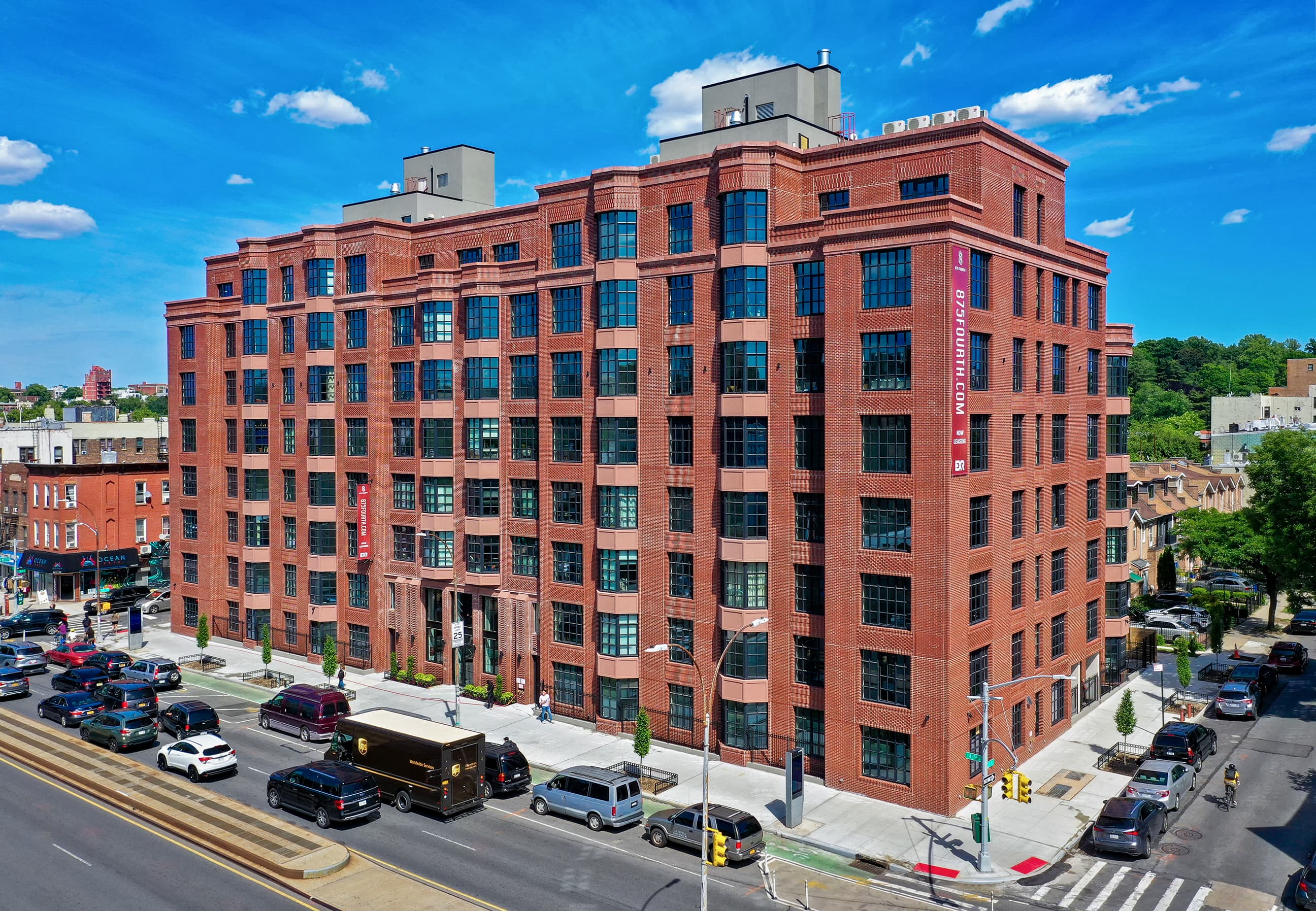
Neighborhood comparison
Sunset Park vs Park Slope: How They Differ
These two come up in the same conversation constantly, usually framed as the expensive one and the cheaper one. That framing hides the difference that will actually shape your year, which is what each one asks you to give up. Below is what you get in each, and a way to compare them that does not rely on a number somebody published last spring.
The comparison at a glance
| Category | Park Slope | Sunset Park |
|---|---|---|
| How it feels | Settled and low-key. Brownstone blocks, a long-established main street, everything has been there a while. | Busier and more commercial. Market-stall energy on the avenues, a waterfront that is still changing. |
| Housing stock | Mostly prewar, built roughly 1900 to 1940. Walk-ups are the norm. | A mix of prewar and recent construction, so elevators and shared amenities are actually available. |
| Transit | F, G, R and the 2 and 3 at Grand Army Plaza. More lines, more transfer options. | D, N and R along Fourth Avenue, with express service at 36 Street. |
| Food | A mature restaurant and bar scene along Fifth and Seventh Avenues. | Three food corridors: Eighth Avenue, Fifth Avenue and the Industry City campus. |
| Green space | Prospect Park, 526 acres, on the doorstep. | A hilltop park with harbor views, Green-Wood Cemetery, and waterfront access at Bush Terminal. |
Rent, and how to compare it honestly
Yes, the Slope generally costs more. No honest article can tell you by how much, because the answer moves with apartment size, building type and the month you are looking. Any published range is out of date before a search engine has finished indexing it.
What does work is a like-for-like comparison you run yourself:
- Pick one apartment size and hold it fixed. A Park Slope one-bedroom in a walk-up and a Sunset Park one-bedroom in a new building are different products.
- Add what the rent includes. Laundry, cooling, an elevator and a gym are either in the rent or in your own budget, and moving them between columns changes the answer.
- Compare current listings on the same day. Both neighborhoods move.
875 Fourth Avenue, for reference
Currently studios from $3,200/mo, one-bedrooms from $3,895/mo, and two-bedrooms from $4,500/mo as asking rent, with special concessions on select current units, up to 2 months free, with terms varying by home. Those figures come from the same feed as the availability page, so they move when the inventory does. Confirm pricing and the features of a specific home with EXR leasing.
The comparison, run in one afternoon
Five steps. At the end you have a number for each neighborhood that reflects your life rather than an average of everybody else’s, and it will not match the number you started with.
Fix the apartment size and the building type
One bedroom count, one kind of building. A Park Slope one-bedroom in a walk-up and a Sunset Park one-bedroom in a building with an elevator are two different products, and comparing them on rent alone is the mistake that makes the whole exercise useless.
Pull twenty listings, ten in each, on the same afternoon
Not a median, the actual listings. Write down the cheapest and the most expensive in each column. A published average flattens that spread, and the spread is what you are really shopping in.
Move the included items into the rent column
If one apartment has laundry in the building and the other does not, price the laundromat. If one has a gym and you would join one anyway, price the gym. If one needs window units, price the units and the summer electricity. Then add each number to that side of the comparison.
Add the parking line if a car is involved
A garage space against street parking is not only a monthly charge. The Department of Finance lists a street cleaning ticket at $65 plus a $15 state surcharge, and the hours of moving the car are real whether or not you cost them.
Ride both commutes at your hour
Same destination, same time of day, once each. This is the step that overturns the paper result most often, and it takes one morning.
Most people who do this properly find the gap is smaller than the headline suggests, and occasionally they find it runs the other way. What decides it is almost never the rent line on its own.
Transit
Both neighborhoods sit on the Fourth Avenue corridor, which is the great equalizer: the D, N and R serve them both.
Sunset Park
36 Street carries the D, N and R and is an express stop, which matters more than most station comparisons. 25 Street, 45 Street and 53 Street carry the R and serve the rest of the neighborhood.
Park Slope
4 Avenue and 9 Street adds the F and G to the R. 7 Avenue carries the F and G further into the neighborhood, and Grand Army Plaza adds the 2 and 3 toward Manhattan's west side. More lines, and more ways to transfer within Brooklyn.
The honest verdict: Park Slope wins on variety. For a Midtown or Lower Manhattan trip on the Fourth Avenue express, the two are close enough that the deciding factor is your own door-to-platform walk. Check the MTA subway map and the current service alerts for the hours you would actually travel, rather than trusting any estimate.
Every station in both, with lines and elevators
Neighborhood-level transit comparisons hide the thing that matters, which is that two addresses in the same neighborhood can sit on completely different service. This table is every station across both, taken from the State’s MTA Subway Stations dataset and read on September 22, 2026.
| Station | Area | Lines | Elevator |
|---|---|---|---|
| Grand Army Plaza | Park Slope | 2 and 3 | No elevator |
| 7 Av | Park Slope | F and G, plus a separate B and Q station of the same name | Accessible on the F and G |
| 15 St-Prospect Park | Park Slope | F and G | No elevator |
| Union St | Park Slope | R | No elevator |
| 4 Av-9 St | Park Slope | F and G, and R | No elevator |
| Prospect Av | The border stretch | R | No elevator |
| 25 St | Greenwood Heights | R | No elevator |
| 36 St | Sunset Park | D, N and R | No elevator |
| 45 St | Sunset Park | R | No elevator |
| 53 St | Sunset Park | R | No elevator |
| 59 St | Sunset Park, southern edge | N and R | Accessible |
Read down the elevator column and the picture is uncomfortable but useful: across both neighborhoods, exactly two entries are flagged accessible, 7 Av on the F and G and 59 St on the N and R. Everything else has stairs. If that matters to you it matters more than every other row in this article, and MTA accessibility is where to confirm the current position and check for elevator outages.
Read down the lines column instead and the other pattern appears. 36 St is the only station in either neighborhood with three lines. Most of the Slope’s advantage is variety across the neighborhood rather than at any single station, so the honest comparison is between the specific corner you would live on and the specific corner you would live on.
One more thing the table cannot show you, and it is the kind of detail that decides a morning. The State also publishes every street entrance, and the counts are lopsided: 4 Av-9 St has two stairs, 25 St has two, 36 St has three, 45 St has four, 53 St has five, and 59 St has five plus the elevator. Fewer stairs means a longer walk along the avenue before you can get down to the platform, and it means the crowd funnels. Stand at the corner you are considering and look for the nearest staircase before you decide the station is close.
Food
This is where the two feel least alike, and where preference matters more than any ranking.
Up the hill, Fifth and Seventh Avenues are lined with restaurants, wine bars and cafes that have had twenty years to sort themselves out. Prices match the neighborhood. Weekend brunch runs on reservations or on patience, and if you turn up at eleven on a Sunday without either, you will be standing on the sidewalk.
Downhill it works differently. Three corridors run alongside each other here, and they have never blended. Eighth Avenue is one of New York's major Chinese commercial streets, with Vietnamese restaurants and bakeries alongside it. Fifth Avenue is the Latin American corridor, mostly Mexican and Central American, and it has a business improvement district behind it: the Sunset Park BID was established in 1995, covers Fifth Avenue from 38th to 64th Street, and counts more than 600 businesses on that one avenue. The Industry City campus sits between them with its own food halls. The food guide covers all three properly.
The housing stock
This is the structural difference, and it surprises people more than the rent does.
Most of Park Slope's rental inventory is prewar: brownstones and walk-ups built roughly between 1900 and 1940, with the character that goes with them and the compromises too. Typically three to five stories without an elevator, laundry outside the apartment, window units rather than a system you control, no shared amenities, and street parking only.
Down on Fourth Avenue the stock is younger. Enough new residential building has happened here that elevators, shared amenities and garages actually exist as options, which is not true a few blocks uphill. 875 Fourth Avenue is one of them, and what it confirms is:
- Elevator access, and kitchens with stainless steel appliances and quartz countertops.
- Every residence includes a dishwasher.
- Apartments use split-system A/C units. Confirm controls and the heating setup for the specific residence with EXR leasing.
- Ask EXR leasing to confirm the laundry equipment and setup in the specific residence you are considering.
- A furnished rooftop terrace with Manhattan skyline views; The building's grills are on the rooftop terrace only.
- An on-site garage with 21 parking spaces. Current availability, pricing, eligibility, and assignment terms must be confirmed with EXR leasing.
- The building has a resident fitness center. The building has a resident co-working lounge. Doorman service is provided from 9:00 AM to 5:00 PM, seven days a week.
Ceiling height, windows, closets, outdoor space, and the view vary by residence; ask EXR leasing to confirm them for the specific home you are considering.
Green space
Prospect Park settles one half of this. There is no arguing with it. The City’s Parks Properties dataset records it at 526.25 acres, one of only two parks in Brooklyn the City classifies as a flagship park, bounded by Prospect Park West, Flatbush, Parkside and Ocean Avenues. If daily access to a park of that scale is the deciding factor, the decision is already made.
The other half is three smaller places that add up to more than people expect. The same dataset records the neighborhood’s own hilltop park at 24.5 acres, running from 41st Street to 44th Street between Fifth and Seventh Avenues, and classifies it as a community park. It carries the harbor and skyline views the neighborhood is named for; NYC Parks publishes its current facilities and programs.
Green-Wood Cemetery is the second. It gives its own size as 478 acres, founded in 1838 and designated a National Historic Landmark in 2006, and its hours page puts the main entrance at Fifth Avenue and 25th Street, open 7am to 7pm from April through September and 8am to 5pm from October through March, with a Sunset Park gate on Fourth Avenue at 35th Street open 8am to 4pm daily. Its rules allow no pets aside from service animals, no bicycles or scooters inside the gates, and no running, jogging or picnicking. Bush Terminal Piers Park is the third, adding waterfront access that Park Slope does not have at all.
One practical note that cuts the other way. The City’s Dog Runs dataset lists an active run at Washington Park in zip code 11215 on the Park Slope side, and none at all in 11232. If you have a dog, that is a genuine point for Park Slope, and the pet guide covers what the alternatives are.
The border is a few blocks
Most comparisons forget to mention that these two places are neighbors. 875 Fourth Avenue sits in the Greenwood Heights stretch where all three names overlap on the same blocks, near the 36 Street D, N and R station, with Green-Wood to the east and Industry City to the west. Walk the routes yourself with current maps and you will find that an address near the border uses both neighborhoods rather than choosing one.
Having walked this stretch more times than I can count, here is what I would actually tell someone weighing the two. Go up Fourth Avenue to the cemetery gate at 35th Street, then cut east and climb toward Fifth. The hill is the whole argument. People talk about these as two neighborhoods with a line drawn between them. What you actually get is one long slope with different housing on it at different heights, and a twenty minute walk that carries you through both.
Questions renters ask
Is Sunset Park cheaper than Park Slope?
Generally yes, but the gap moves and it is not uniform across apartment sizes or building types. Compare live listings for the same size and the same kind of building in both neighborhoods rather than relying on a published range.
Do the two neighborhoods share a subway line?
Yes. Both sit on the Fourth Avenue corridor served by the D, N and R. Park Slope adds the F and G, and the 2 and 3 at Grand Army Plaza, so it has more transfer options.
Which has better food?
They are good at different things. Park Slope has the mature restaurant and bar scene. Sunset Park has three distinct food corridors, including one of New York’s major Chinese commercial streets and a Latin American one.
Where does 875 Fourth Avenue actually sit?
On Fourth Avenue, in the stretch where Sunset Park, Greenwood Heights and Park Slope meet, near the 36 Street D, N and R station. Use current maps to check walking routes from the address to the places that matter to you.
Which stations in Park Slope and Sunset Park have elevators?
Across both neighborhoods, the State’s MTA Subway Stations dataset flags two: 7 Av on the F and G in Park Slope, and 59 St on the N and R at the southern edge of Sunset Park. Grand Army Plaza, 15 St-Prospect Park, Union St, 4 Av-9 St, Prospect Av, 25 St, 36 St, 45 St and 53 St are all flagged as not accessible.
How big is Prospect Park compared to Sunset Park?
The City’s Parks Properties dataset records Prospect Park at 526.25 acres and classifies it as a flagship park, one of only two in Brooklyn. It records Sunset Park at 24.5 acres as a community park, running from 41st to 44th Street between Fifth and Seventh Avenues. Green-Wood Cemetery, which is private rather than a City park, gives its own size as 478 acres.
Which neighborhood is better if I have a dog?
Park Slope, on the specific question of a fenced off-leash run. The City’s Dog Runs dataset lists an active run at Washington Park in 11215 and none anywhere in 11232. Green-Wood Cemetery, the largest green space on the Sunset Park side, allows no pets aside from service animals.
Walk both and decide
Send a tour request with your preferred timing, then spend the rest of the afternoon walking the blocks in each direction. That answers the question faster than any comparison table, including this one.