Neighborhoods
The Best Brooklyn Neighborhoods to Rent in 2026, Ranked by Rent, Subway and Green Space
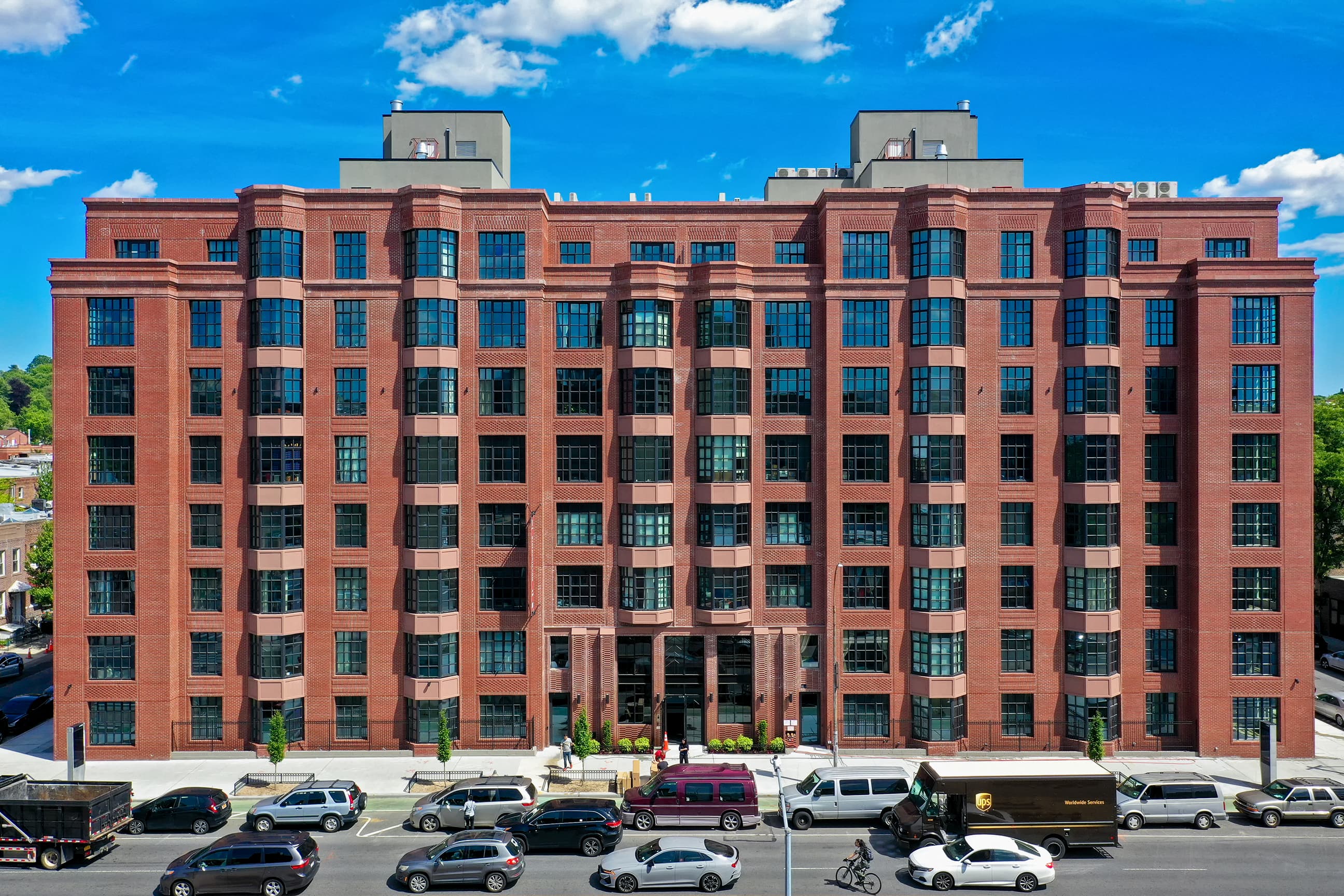
Published by 875 Fourth Avenue, a rental building in Sunset Park. StreetEasy files our block in its Greenwood area, which this ranking calls Greenwood Heights.
On our three measures, Prospect Lefferts Gardens ranks first among 16 Brooklyn neighborhoods for renters in 2026. Park Slope and Brooklyn Heights follow. The lowest one-bedroom median asking rent belongs to Bay Ridge at $2,300, the shortest typical morning subway ride into Manhattan to DUMBO and Brooklyn Heights (tied), and the most public green space within a 10-minute walk of a station to Prospect Lefferts Gardens.
Which Brooklyn neighborhoods rank best for renters in 2026?
We measured 16 Brooklyn neighborhoods on three things a renter lives with every month: the rent, the subway ride into Manhattan and the public green space within reach. Each column shows the figure and, in brackets, where it ranks out of 16. The last column adds the three ranks, and the lowest total ranks first.
| Neighborhood | One-bedroom median asking rent | Best station: Herald Sq / Fulton St | Public green space within a 10-minute walk | Rank total |
|---|---|---|---|---|
| 1. Prospect Lefferts Gardens | $3,000 (3) | 25 / 21 min (11) | 567 acres (1) | 15 |
| 2. Park Slope | $4,000 (9) | 25 / 14 min (5) | 551 acres (3) | 17 |
| 3. Brooklyn Heights | $4,635 (13) | 24 / 5 min (1) | 116 acres (5) | 19 |
| 4. DUMBO | $5,250 (16) | 16 / 13 min (1) | 111 acres (6) | 23 |
| 5. Greenwood Heights | $3,250 (6) | 25 / 23 min (14) | 505 acres (4) | 24 |
| 6. Prospect Heights | $4,600 (12) | 28 / 17 min (10) | 552 acres (2) | 24 |
| 7. Fort Greene | $4,453 (11) | 27 / 10 min (4) | 39.6 acres (10) | 25 |
| 8. Williamsburg | $4,695 (14) | 19 / 13 min (3) | 54.9 acres (8) | 25 |
| 9. Bay Ridge | $2,300 (1) | 34 / 30 min (16) | 51.6 acres (9) | 26 |
| 10. Bedford-Stuyvesant | $3,220 (5) | 28 / 13 min (7) | 21.3 acres (14) | 26 |
| 11. Clinton Hill | $3,950 (8) | 29 / 12 min (7) | 38.2 acres (11) | 26 |
| 12. Bushwick | $3,200 (4) | 25 / 17 min (9) | 13.4 acres (15) | 28 |
| 13. Sunset Park | $2,400 (2) | 29 / 25 min (15) | 26.5 acres (12) | 29 |
| 14. Carroll Gardens | $4,200 (10) | 23 / 16 min (5) | 5.4 acres (16) | 31 |
| 15. Crown Heights | $3,400 (7) | 29 / 18 min (12) | 23.5 acres (13) | 32 |
| 16. Greenpoint | $4,700 (15) | 19 / 28 min (12) | 70.2 acres (7) | 34 |
The subway column gives the scheduled minutes from each neighborhood’s best station to 34 St-Herald Sq in Midtown and to Fulton St downtown, on weekday trains leaving between 7:00 and 9:00 AM. Walking time to the station is not included.
How did we rank them?
Every measure is read on one set of neighborhood boundaries, StreetEasy’s own, the areas its rent figures are computed on. The figures come from public datasets, plus the acreage that four green-space operators publish for their own grounds.
- Rent. StreetEasy’s median asking rent for a one-bedroom in October 2026, from its public market data. Asking rents are what listings advertise, before any concession.
- Subway. The MTA’s published subway timetable in effect from November 1, 2026, every weekday train leaving from 7:00 to 9:00 AM, with at most one change. Each station inside the boundary gets its median minutes to each hub, and the neighborhood is scored on its best station, the one with the lowest average of the two. The rank uses the whole minutes printed in the table.
- Public green space. Acres of public green space within a real 10-minute walk, 800 meters on the street and path network, from any subway station in the neighborhood. We route each walk on OpenStreetMap’s streets and paths to the nearest way into the space: a mapped entrance or the park’s edge, and for Green-Wood only its two gates that open every day. No route may cross the Brooklyn Botanic Garden or a golf course. Each neighborhood is scored on its greenest station, and each space counts once, in full. City parks come from the City’s Parks Properties dataset at NYC Parks acreage (flagship park, community park, neighborhood park, playground, jointly operated playground, recreational field/courts, garden, triangle/plaza, nature area, waterfront facility and historic house park); a park in several separate parts counts part by part. Other green space counts on one rule, open to the public every day with no admission charge, at the acreage its operator publishes: Green-Wood Cemetery (478 acres, per Green-Wood), Brooklyn Bridge Park (85 acres, per Brooklyn Bridge Park), Marsha P. Johnson State Park (7 acres, per New York State Parks) and Domino Park (5 acres, per Domino Park).
We left out the Brooklyn Botanic Garden, which charges admission; the golf course inside Dyker Beach Park, which charges green fees; the Brooklyn Museum grounds, which are museum land; and The Evergreens Cemetery, which publishes daily gate hours but no public-access policy. A straight-line measure would change the order: it treats a park behind a wall, a closed garden or a weekend-only gate as close, and the walking rule does not. Walks that land close to the 800-meter line can differ by a few meters between routing tools; Brooklyn Bridge Park from Clark St is one such case, and no rank changes either way.
The three ranks carry equal weight, and the lowest total ranks first. A tie on the total goes to the lower one-bedroom rent. If one measure matters more to you, read its column on its own, or use the table below, which ranks on rent and the subway alone. With green space left out, the top five on rent and the subway are Bedford-Stuyvesant, Bushwick, Prospect Lefferts Gardens, Park Slope and Brooklyn Heights.
| Neighborhood | Rent rank plus subway rank | Place on all three |
|---|---|---|
| 1. Bedford-Stuyvesant | 12 | 10 of 16 |
| 2. Bushwick | 13 | 12 of 16 |
| 3. Prospect Lefferts Gardens | 14 | 1 of 16 |
| 4. Park Slope | 14 | 2 of 16 |
| 5. Brooklyn Heights | 14 | 3 of 16 |
| 6. Clinton Hill | 15 | 11 of 16 |
| 7. Carroll Gardens | 15 | 14 of 16 |
| 8. Fort Greene | 15 | 7 of 16 |
We chose the sixteen from the neighborhoods renters searched for when they found this article, plus the eight it compared before 2026. The source files were read on November 28, 2026, and the StreetEasy boundary capture shows the areas we used.
Which Brooklyn neighborhood is cheapest, fastest and greenest?
Cheapest to rent
By one-bedroom median asking rent in October 2026, the three lowest are Bay Ridge ($2,300), Sunset Park ($2,400) and Prospect Lefferts Gardens ($3,000). The highest is DUMBO at $5,250.
Shortest subway ride
Averaging the two hubs, the shortest typical trips start in DUMBO (14.5 minutes on average), Brooklyn Heights (14.5 minutes on average) and Williamsburg (16 minutes on average). The longest start in Bay Ridge (32 minutes on average).
Most public green space
The most public green space within a 10-minute walk of a station belongs to Prospect Lefferts Gardens (567 acres, led by Prospect Park), Prospect Heights (552 acres, led by Prospect Park) and Park Slope (551 acres, led by Prospect Park).
What stands out in the leading five, Sunset Park and Greenwood Heights?
1. Prospect Lefferts Gardens
Prospect Lefferts Gardens lies along the east side of Prospect Park, between Empire Boulevard and Clarkson Avenue, and its core blocks have been a City historic district since 1979. Inside the park stands the Lefferts Historic House, built around 1783.
From Parkside Av on the Q, the park is 110 meters away on foot. The neighborhood ranks first of 16, with the third-lowest one-bedroom rent of the sixteen, $3,000.
2. Park Slope
Park Slope takes its name from its place on the western slope of Prospect Park. Fifth and Seventh Avenues are its main shopping streets, its side streets are lined with brownstones, and a reconstruction of the Old Stone House, a site of the 1776 Battle of Long Island, stands on Third Street between Fourth and Fifth Avenues.
From Grand Army Plaza on the 2 and 3, the park is 350 meters away on foot. The neighborhood ranks second of 16, with a one-bedroom median of $4,000.
3. Brooklyn Heights
Brooklyn Heights was designated a National Historic Landmark district in 1965, the year its preservation campaign helped bring about the City’s Landmarks Preservation Law. The Promenade above the East River opened in two halves, in 1950 and 1951.
From Clark St the 2 reaches Fulton St in 5 minutes, the quickest downtown trip of the sixteen, and Brooklyn Bridge Park is 787 meters on foot from Clark St. The neighborhood ranks third of 16, with a one-bedroom median of $4,635, 13th of 16 on rent.
4. DUMBO
DUMBO takes its name from an acronym, Down Under the Manhattan Bridge Overpass, and the City designated its warehouse blocks a historic district in 2007. From York St on the F, the trip reaches 34 St-Herald Sq in 16 minutes.
Brooklyn Bridge Park is 345 meters on foot from York St. The neighborhood ranks fourth of 16, held back by the highest one-bedroom median of the sixteen, $5,250.
5. Greenwood Heights
Greenwood Heights was named partly after Green-Wood Cemetery by real estate developers, and the name was in use by the late 1980s. The cemetery was founded in 1838 and has been a National Historic Landmark since 2006. The Battle of Long Island was fought across its grounds in 1776, and its 478 acres are free to visit every day.
The 36 St station, where the D and N run express and the R stops local, is 23 meters on foot from a Green-Wood gate that opens every day, and the N reaches 34 St-Herald Sq in 25 minutes. It ties Prospect Heights at 24 points and takes fifth of 16 on the stated tie-break, the lower one-bedroom rent. 875 Fourth Avenue is on this stretch of Fourth Avenue.
13. Sunset Park
Sunset Park is named after its hilltop park, 24.5 acres between 41st and 44th Streets and Fifth and Seventh Avenues, where the top lawn looks out over the harbor, the Statue of Liberty and the Manhattan skyline. The park’s public pool opened in 1936.
The park is 419 meters on foot from 45 St on the R. The neighborhood has the second-lowest one-bedroom rent of the sixteen, $2,400, and ranks thirteenth of 16 overall: the subway is its weakest measure, and with one change the trip from 45 St reaches 34 St-Herald Sq in 29 minutes.
What sits behind each neighborhood’s rank?
The station that sets each subway score, the station whose walk sets each green-space score, its largest green spaces within a 10-minute walk and how many one-bedroom listings stand behind each median.
| Neighborhood | Subway score from | Green space measured from | Largest green spaces within a 10-minute walk | One-bedroom listings |
|---|---|---|---|---|
| 1. Prospect Lefferts Gardens | Prospect Park | Parkside Av | Prospect Park (526 acres), Parade Ground (39.5 acres) | 42 |
| 2. Park Slope | Bergen St | Grand Army Plaza | Prospect Park (526 acres), Grand Army Plaza (14.3 acres) | 119 |
| 3. Brooklyn Heights | Clark St | Clark St | Brooklyn Bridge Park (85 acres), Cadman Plaza Park (10.4 acres) | 49 |
| 4. DUMBO | York St | York St | Brooklyn Bridge Park (85 acres), Cadman Plaza Park (10.4 acres) | 36 |
| 5. Greenwood Heights | 36 St | 36 St | Green-Wood Cemetery (478 acres), Sunset Park (24.5 acres) | 54 |
| 6. Prospect Heights | Eastern Pkwy-Brooklyn Museum | Eastern Pkwy-Brooklyn Museum | Prospect Park (526 acres), Grand Army Plaza (14.3 acres) | 49 |
| 7. Fort Greene | Lafayette Av | Fulton St | Fort Greene Park (30.2 acres), Dean Playground (1.3 acres) | 100 |
| 8. Williamsburg | Marcy Av | Bedford Av | McCarren Park (35.9 acres), Bushwick Inlet Park (7.1 acres) | 312 |
| 9. Bay Ridge | Bay Ridge Av | Bay Ridge-95 St | Shore Park and Parkway (37.7 acres), John J Carty Park (8.6 acres) | 76 |
| 10. Bedford-Stuyvesant | Nostrand Av | Utica Av | St. John's Park (9 acres), Fulton Park (2 acres) | 349 |
| 11. Clinton Hill | Clinton-Washington Avs | Clinton-Washington Avs | Fort Greene Park (30.2 acres), Classon Playground (1.3 acres) | 81 |
| 12. Bushwick | Myrtle Av | Knickerbocker Av | Maria Hernandez Park (6.9 acres), Bushwick Playground (2.8 acres) | 223 |
| 13. Sunset Park | 45 St | 45 St | Sunset Park (24.5 acres), Gonzalo Plasencia Playground (1.2 acres) | 27 |
| 14. Carroll Gardens | Carroll St | Carroll St | Dimattina Playground (1.9 acres), Carroll Park (1.9 acres) | 28 |
| 15. Crown Heights | Franklin Av-Medgar Evers College | Crown Hts-Utica Av | Lincoln Terrace / Arthur S. Somers Park (14.4 acres), St. John's Park (9 acres) | 288 |
| 16. Greenpoint | Greenpoint Av | Nassau Av | McCarren Park (36.5 acres), Bushwick Inlet Park (22.7 acres) | 181 |
Where does each Brooklyn subway line go in Manhattan?
A short ride only helps if the line reaches your destination. This table lists the Manhattan stops on each line, taken from the State’s MTA Subway Stations dataset.
| Line | Manhattan corridor | The stops that matter |
|---|---|---|
| R | Lower Manhattan and the Broadway local | City Hall, Cortlandt St, Rector St and Whitehall St, then up through Union Square, Herald Square and Times Square to 57 St and Lexington Av/59 St. |
| D and N | Midtown, by two different routes | The D crosses the Manhattan Bridge for Sixth Avenue: Broadway-Lafayette St, W 4 St, Herald Square, Bryant Park, Rockefeller Center and Columbus Circle. The N runs Broadway to Canal St, Union Square, Herald Square, Times Square and 59 St. |
| F and G | Sixth Avenue, and nothing at all | The F runs up Sixth Avenue through W 4 St, Herald Square, Bryant Park, Rockefeller Center and Lexington Av/53 St. The G has no Manhattan stops at all. |
| L | The 14th Street crosstown | Five Manhattan stops, all on 14th Street: 1 Av, 3 Av, Union Square, 6 Av and 8 Av. Excellent if you work there, a transfer if you do not. |
| A and C | The Eighth Avenue spine | Fulton St, Chambers St, Canal St, W 4 St and up the West Side. The A runs express and skips most of the C stops. |
| 2, 3, 4 and 5 | The East Side and the Financial District | The 4 and 5 run Grand Central, Union Square, Brooklyn Bridge-City Hall, Fulton St, Wall St and Bowling Green. The 2 and 3 run the West Side through Chambers St, Park Place, Fulton St and Wall St. |
| B and Q | Sixth Avenue and Second Avenue | The B runs Sixth Avenue with the D. The Q runs Broadway then swings east to Lexington Av/63 St and up Second Avenue to 72 St, 86 St and 96 St. |
| J, M and Z | The Lower East Side and downtown | The J and Z stop at Delancey St-Essex St, Canal St, Chambers St, Fulton St and Broad St. The M leaves them at Essex Street and runs up Sixth Avenue instead. |
A station with four lines helps only if one of them reaches you without a transfer. And the G, a useful north-south Brooklyn line, reaches no part of Manhattan at all. Confirm the trip you will make on the subway map and check service alerts for planned work on that line, which tends to land on weekends.
What are the North Brooklyn neighborhoods like?
Williamsburg
The waterfront towers and the inland blocks are almost two different neighborhoods at the same address. Density of restaurants and bars is the draw, the L is the spine, and much of it depends on that one line more than people notice until it is disrupted.
Before you commit, stand at Bedford Av and work out your route to work without the L. If the answer is a bus to the G and then a transfer, you have learned what a weekend of track work will cost you. The blocks closest to the waterfront have most of the newer buildings with elevators; walk ten minutes inland and the stock turns over to older low-rise.
Bushwick
Bushwick offers converted industrial buildings, studio space, music and murals, at the cost of a longer trip to Midtown and housing stock that varies enormously from block to block. Go and look at the specific building; the neighborhood average means very little here.
The J, M and Z are the part of Bushwick transit that gets ignored. The M runs up Sixth Avenue through Midtown, which is a very different commute from the L, and the J and Z run straight into the Financial District. If your office is downtown rather than in Midtown, the eastern side of Bushwick is worth more to you than the L blocks everyone photographs.
DUMBO
DUMBO pairs warehouses and bridges with a short trip into Lower Manhattan, and a one-bedroom median of $5,250.
York St on the F is not flagged accessible, the cobblestone streets are uneven underfoot, and the area is small enough that one building coming online moves what is available. Brooklyn Bridge Park sits along the waterfront and does a lot of the work that a private amenity does elsewhere.
What are the brownstone neighborhoods like?
Brooklyn Heights
Brooklyn Heights has the promenade, a historic district, the 2 and 3 at Clark St and the R at Court St. The housing is long settled and mostly prewar, so every prewar question about laundry, elevators and cooling applies here too. Borough Hall and Jay St-MetroTech are both flagged accessible; Clark St, where the 2 and 3 stop, is not. If that matters to you, check your own station on MTA accessibility before you shortlist the block.
Park Slope
Park Slope has Prospect Park, a settled main street and a great many walk-ups. Transit is good, with the F and G alongside the R and the 2 and 3 at Grand Army Plaza. The comparison with Sunset Park covers what the premium buys and what it does not.
The Park Slope stations sit on three different systems. 7 Av on the F and G is flagged accessible, Grand Army Plaza on the 2 and 3 is not, and the R runs beneath Fourth Avenue at the western edge. Across its five stations, the morning trip to the same hub differs by up to about eight minutes, so price the specific blocks.
Crown Heights
Crown Heights borders the Brooklyn Museum, the Botanic Garden and the eastern side of Prospect Park, and its prewar apartment buildings tend to offer more room for the money than blocks further west. Transit is the strong suit: the 2, 3, 4 and 5 all run through it on Eastern Parkway, the A and C sit to the north, and the Franklin Avenue shuttle connects the two. Eastern Pkwy-Brooklyn Museum and Franklin Av on the C and the shuttle are flagged accessible; Franklin Av-Medgar Evers College on the 2, 3, 4 and 5 is not.
Bedford-Stuyvesant
Bedford-Stuyvesant has some of the finest brownstone architecture in the city, over an area large enough that the name tells you less than the cross street does. It is well served by trains and varies block to block.
Three separate systems cross it: the A and C along Fulton Street, the G at Bedford-Nostrand Avs, and the J and M at Marcy Av and Flushing Av. Which one you live near changes the commute completely, and a listing that says “Bed-Stuy” is describing an area big enough to contain all three. Look up the actual nearest station before you compare two listings on price.
What is the Fourth Avenue corridor like?
Sunset Park and Greenwood Heights
The Fourth Avenue corridor is the part of this list where recent construction and older stock actually sit side by side, which means elevators, shared amenities and garages are available in a way they are not in the brownstone neighborhoods. The D, N and R run beneath it, and 36 Street is an express stop.
At 36 St, the D and the N serve Midtown by two different routes while the R makes every stop down to Lower Manhattan, so one station covers both halves of Manhattan without a transfer. The trade-off is that neither 36 St nor 25 St is flagged accessible, and the nearest accessible stations on the line are 59 St to the south and Atlantic Av-Barclays Ctr to the north.
Above ground it is three food corridors, the Industry City waterfront, Green-Wood Cemetery at the northern edge and a hilltop park with harbor views. Sunset Park, the hilltop park, is listed in the City’s Parks Properties dataset at 24.5 acres, running from 41st Street to 44th Street between Fifth and Seventh Avenues.
Green-Wood’s own hours page puts one of its four gates on Fourth Avenue at 35th Street, open 8 a.m. to 4 p.m. daily. It is also a working neighborhood with an industrial western edge and an elevated expressway running through it, which is worth standing on a sidewalk to judge. The Sunset Park guide and the Greenwood Heights guide both go into it properly.
In the ranking above, Sunset Park places 13th of 16, with ranks of 2 on rent, 15 on the subway and 12 on green space. Greenwood Heights places 5th, with ranks of 6 on rent, 14 on the subway from 36 St and 4 on green space. Green-Wood counts for both.
Our building on the corridor
875 Fourth Avenue is our eight-story elevator building on Fourth Avenue between 32nd and 33rd Streets, with 150 residences. The 36 St express stop that scores Greenwood Heights is three blocks south of our door, and Green-Wood’s Sunset Park Entrance is two blocks south. Sunset Park’s score comes from 45 St.
- A furnished rooftop terrace with Manhattan skyline views and grills.
- A resident fitness center and a co-working lounge.
- A dishwasher in every residence, with split-system A/C units.
- An on-site garage with 21 parking spaces.
Spaces are limited. Layouts differ from home to home, and several residences open onto large private terraces. Current homes and asking rents are on the availability page.
What should you check on a viewing?
Once the list is down to two neighborhoods you will be standing in apartments, and a viewing is fifteen minutes in which it is very easy to look at the wrong things. These five questions will tell you whether you are in a good apartment or just a well photographed one.
Ask what the laundry situation actually is
In the apartment, in the building, or down the street. No other amenity shapes a week this much, and listings are often vague about it. Ask where the machines are, how many there are and what they cost.
Find out how the apartment is heated and cooled
Radiators with no thermostat behave very differently from a system you control. Ask who controls the heat, what the cooling is, and whether window units are permitted if there is no built-in system. Then ask what a January and an August bill look like.
Open a window and listen
For a full minute, at the hour you would be home. An avenue, a side street and a block beside an elevated road sound completely different, and no photograph carries it.
Check the phone signal in the back room
Thick masonry and below-grade rooms swallow signal. Thirty seconds of walking around with your own phone answers a question you will otherwise live with.
Ask what the building does about packages
A doorman with set hours, a package room, a lobby shelf or nothing at all. Ask what happens to a delivery that arrives while you are at work, and what the building does about mail when you travel.
How do you narrow the list to two?
Five steps, in this order. Done properly it takes an afternoon and saves you a year of living somewhere that does not fit.
Start from the subway line
Put your most frequent destination into the MTA subway map and see which lines actually serve it. That usually removes half this table before you have thought about anything else.
Decide the building type
Prewar walk-up or newer building with an elevator. It decides laundry, cooling, noise and whether a gym and a roof are in your building or in your budget. The comparison guide goes through the trade-offs.
Price two neighborhoods on the same day
One apartment size, live listings, two neighborhoods, same afternoon. Write down the ten cheapest and the ten most expensive results in each, then compare the spreads instead of the middles. It takes twenty minutes.
Ride both commutes, at your hour
Ride the real trip. Leave at the time you would leave, take the transfer you would take, and note what the platform is like when you get there. Two neighborhoods that look equivalent on a map routinely differ by fifteen minutes in practice.
Walk both, at your hours
A weekday morning and an evening. Buy something, sit somewhere, and pay attention to how long it takes to do an ordinary errand.
Run the same two searches again a week later. Save them and watch what moved. Listings that vanish in three days and listings that sit for a month tell you more about a market than any average does.
Questions people ask
What is the best neighborhood to rent in Brooklyn in 2026?
On rent, the morning subway ride and public green space weighted equally, Prospect Lefferts Gardens ranks first among the 16 neighborhoods we measured, then Park Slope and Brooklyn Heights. The best one for you depends on which of the three matters most, so the table shows each score on its own.
What is the cheapest Brooklyn neighborhood to rent in?
Of the 16 we measured, Bay Ridge had the lowest one-bedroom median asking rent in StreetEasy’s October 2026 data, at $2,300. Brooklyn’s borough-wide one-bedroom median was $3,500. Asking rents move every month, so treat these as a snapshot and compare live listings for the same size.
Which Brooklyn neighborhood has the shortest commute to Manhattan?
DUMBO and Brooklyn Heights (tied), on the MTA’s weekday morning timetable. In DUMBO, the best station, York St, reaches 34 St-Herald Sq in 16 minutes and Fulton St in 13 minutes. Scheduled times leave out the walk to the station and any delay.
How did you rank the neighborhoods?
Each neighborhood is ranked 1 to 16 on three measures: StreetEasy’s one-bedroom median asking rent, the scheduled weekday-morning subway ride from its best station to 34 St-Herald Sq and to Fulton St, and acres of public green space within a real 10-minute walk, 800 meters on the street network, of its greenest station (City parks plus green space open to the public every day with no admission charge, such as Green-Wood and Brooklyn Bridge Park). The three ranks are added with equal weight and the lowest total ranks first. A tie on the total goes to the lower one-bedroom rent.
Does the G train go to Manhattan?
No. The State open data for MTA subway stations lists no Manhattan stop on the G at all. It is a useful north-south line within Brooklyn and Queens, and any commute into Manhattan on it starts with a transfer, most often to the L, the F or the A and C.
Which Brooklyn subway stations have elevators?
Fewer than people expect, and the pattern is not geographic. On the Fourth Avenue line, 59 St and Atlantic Av-Barclays Ctr are flagged accessible while 25 St, 36 St, 45 St and 53 St are not. In Park Slope, 7 Av on the F and G is flagged accessible and Grand Army Plaza is not. Check your own station on the MTA accessibility pages before you shortlist a block.
How often is this ranking updated?
The rents are StreetEasy’s October 2026 figures and the rides come from the MTA timetable that took effect on November 1, 2026. We re-run the same script when StreetEasy publishes a new month, and the date at the top of the article changes when the numbers do.
Put the Fourth Avenue corridor on the list
Send a tour request with your preferred timing, then walk from the 36 St express stop to Green-Wood and Sunset Park while you are here. Two neighborhoods on foot will tell you more than sixteen on a page.